
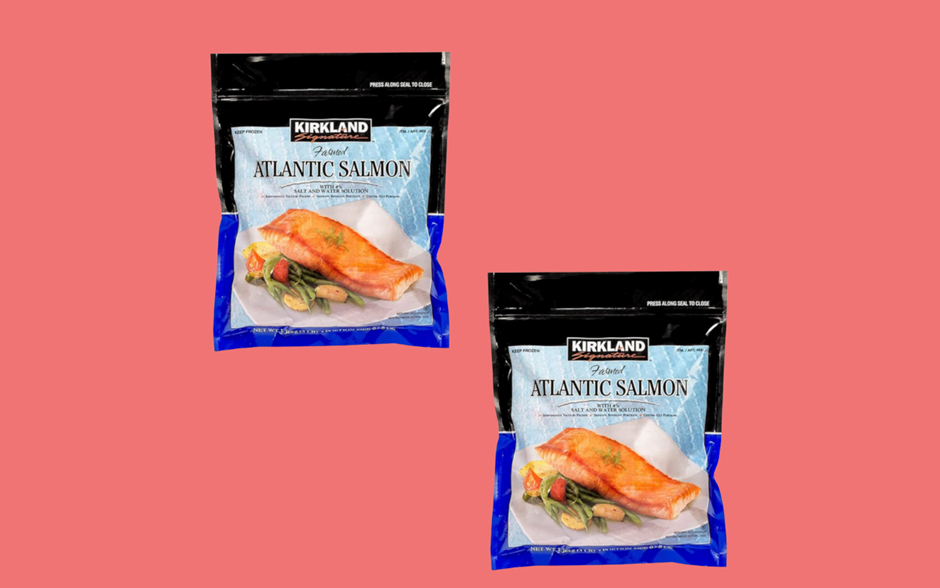
Quick Take
If your household eats salmon pretty regularly and you like easy portion control, solid freezer storage, and consistent texture more than intense wild-caught flavor, this Kirkland Signature Farmed Atlantic Salmon is a strong buy.
It comes as farm-raised Atlantic salmon—boneless, skinless, uncooked, and packed in handy 6–8 oz center-cut portions inside a resealable 3 lb bag. Costco’s same-day listing also notes a 4% salt and water solution.
Here’s the contrarian part: that 4% salt-and-water solution isn’t automatically a bad thing. It can actually make the fish more forgiving for weeknight meals, but it does mean you should judge the value by what you get after cooking, not just the sticker price per pound.
This isn’t really about “restaurant-quality” salmon. It’s about low-friction protein you can pull from the freezer and turn into dinner with almost no prep, trimming, or waste.
Compared to wild sockeye, it’s milder, fattier, softer, and way more forgiving. Compared to fresh salmon, you give up a bit of texture but gain reliable storage.
Food safety is important with vacuum-packed frozen fish, so always thaw it properly—in the fridge, cold water, or microwave—and cook to 145°F (unless you’re using a different personal risk level). Salmon sits in the FDA/EPA’s lower-mercury “Best Choices” category, so it’s a practical option for regular meals as long as you mix it up with other seafood.
I didn’t find any recalls for this specific frozen 3 lb uncooked bag, but there was a 2024 recall for Kirkland Signature Smoked Salmon—don’t mix the two up.

Where This Product Fits in the Bigger Picture
Kirkland Signature Atlantic Salmon lives at the crossroads of frozen seafood, Costco’s private-label world, meal-prep proteins, aquaculture, and everyday food safety. It’s not just for home cooks—Costco buyers, processors, logistics teams, sustainability folks, regulators, dietitians, and families all play a role in how it lands in your cart.
The key hubs are:
| Hub | Connected Stakeholders | Why It Matters |
|---|---|---|
| Frozen seafood retail | Costco, processors, cold-chain providers | Portion consistency, freezer quality, price stability |
| Aquaculture | Salmon farms, feed suppliers, certification bodies | Cost, fat profile, sustainability, supply consistency |
| Food safety | FDA, USDA FSIS, home cooks | Thawing, cooking temp, handling |
| Nutrition planning | Dietitians, families, athletes | Protein and omega-3s that vary by species and farming |
| Meal prep operations | Households, caterers, small kitchens | Individual portions cut decision time and waste |
Bottom line: this is more of a smart cold-chain staple than a luxury seafood item. Its real strength is standardization.
Straight Answer
Buy the Kirkland Signature Atlantic Salmon, 3 lbs if you want convenient, mild, individually portioned fish that’s great for baking, air frying, pan searing, or meal prep. Skip it if you’re after firm wild-caught texture, skin-on crisping, or bold salmon flavor.
The most overlooked detail is that 4% salt and water solution on Costco’s same-day page. A lot of reviews talk about taste and price, but the smarter question is whether that solution gives you enough weeknight reliability to make up for the slightly diluted raw weight. For most Costco shoppers, the answer is yes—as long as you cook it carefully and don’t expect wild salmon texture.
What Most Reviews Focus On vs. What Actually Matters
Most people reviewing Costco salmon ask: Does it taste good? Is it cheaper than grocery store salmon? Is frozen as good as fresh?
A better lens is inventory economics. That resealable 3 lb bag of center-cut portions solves three real household headaches: portion sizing, freezer storage, and protein planning. Fresh salmon can be fantastic the day you buy it, but it puts you on the clock. This frozen version trades a bit of peak freshness for dependable availability.
Costco Business Delivery lists it as farm-raised Atlantic salmon, boneless, skinless, 6–8 oz center-cut portions, uncooked, kosher, and frozen. The same-day page (item 46340) adds the 4% salt and water solution. That detail matters because it affects seasoning, moisture, and how you read the price.
At the price I saw during research ($36.65 for the 3 lb bag, or about $12.22 per raw pound), you have to factor in the solution and normal cooked shrinkage. Prices vary by location, warehouse, and delivery method.
What You’re Actually Getting
You’re not buying one big fillet—you’re getting a bag of individual 6–8 oz portions that are perfect for one or two people depending on sides. That changes how it cooks compared to a thick fresh piece.
Boneless and skinless is undeniably convenient, but you lose the skin’s protective buffer and those easy visual cues for doneness. Without skin, it does better with parchment-paper baking, a little oil in the air fryer, or gentle pan searing instead of blasting it on high heat.
Farmed Atlantic salmon is naturally milder and fattier than sockeye, so it’s more forgiving but less intense. Reviews (like the one from Costcuisine) often call it soft, flaky, and mellow—that lines up perfectly with what you’d expect from this type of salmon.
Why the 4% Salt-and-Water Solution Actually Matters
The “4% salt and water solution” phrase can sound off-putting, but its effect depends on your needs.
Salt helps the muscle proteins hold onto moisture during cooking. The added water boosts raw weight and can soften texture just a bit. For busy cooks, that often means fewer dry pieces. For value hunters, it means the price per pound slightly overstates how much pure fish tissue you’re getting.
It’s not automatically bad value. The solution reduces pure-fish yield a little, but it buys you more cooking forgiveness. Confident cooks with fresh fish might prefer no additives. Busy families using an air fryer might love the extra moisture buffer.
This is the gap most reviews miss: Does the 4% solution make it a bad deal? Not automatically. It trades a small amount of raw yield for better everyday performance. Judge it on cooked texture, portion consistency, and reduced waste instead of raw price alone.
How It Cooks in Real Life
The best methods are the ones that protect moisture.
Bake at moderate heat and pull it when the center flakes easily. In the air fryer, lightly oil the surface and check thinner pieces first. For pan searing, pat the thawed portions very dry and don’t move them too soon—skinless fish sticks more easily.
The FDA and FoodSafety.gov recommend cooking fish to 145°F internal temperature. Some home cooks pull salmon earlier for a softer center, but that’s a personal choice, not the official safety standard.
Here’s how it performs in different meals:
- Sheet-pan dinners: Excellent — portions pair perfectly with veggies and grains.
- Air fryer salmon bowls: Excellent — the fat keeps it moist.
- Pan-seared crispy skin: Weak — it’s skinless.
- Salmon salad or rice bowls: Strong — mild flavor loves sauces.
- Fine-dining plated salmon: Moderate — softer than premium fresh cuts.
Value Comparison Table
| Buying Option | Cost Logic | Texture Control | Waste Risk | Best Buyer | Hidden Trade-Off |
|---|---|---|---|---|---|
| Kirkland frozen Atlantic salmon, 3 lbs | Moderate raw price; high portion efficiency | Medium-high | Low | Meal-prep households | 4% solution changes yield and seasoning |
| Fresh farmed salmon fillet | Often higher but varies by market | High if cooked same day | Medium | Confident cooks | Requires timing and trimming |
| Wild sockeye frozen portions | Higher flavor intensity | Lower forgiveness | Low-medium | Shoppers wanting firmer fish | Easier to overcook |
| Canned salmon | Lowest prep burden | Low culinary flexibility | Very low | Pantry protein users | Different meal format entirely |
| Restaurant salmon | Highest cost | Outsourced to kitchen | None at home | Convenience diners | No inventory benefit |
The Costco bag really shines when you treat salmon as part of your regular household system instead of a special occasion.
How It Changes Meal Planning
Switching to individual 6–8 oz portions turns salmon from a “use it or lose it” fresh buy into reliable freezer inventory. You stop asking, “Will this fillet go bad before I cook it?” and start asking, “How many portions should I thaw for tomorrow?” That shift cuts waste and makes salmon way easier to work into weekday meals.
Sustainability and Sourcing
Costco aims to source from Marine Stewardship Council (wild) and Aquaculture Stewardship Council (farmed) certified operations. ASC lists Costco as a retailer carrying certified products, including this Kirkland Farm Raised Atlantic Salmon.
Farmed isn’t automatically “bad” and wild isn’t automatically “perfect.” Farmed can ease pressure on wild stocks and give consistent supply, but quality depends on feed, density, disease control, and certification standards. Wild offers firmer texture and stronger flavor but can be seasonal and pricier. Certification is a risk-management tool, not a guarantee that every concern disappears.
Metrics That Actually Matter
- Cooked yield %: True value after solution, drip, and shrinkage.
- Portion variance: How much sizes differ—impacts even cooking.
- Drip loss after thawing: Tells you about texture retention.
- Overcook tolerance: How forgiving it is on busy nights.
- Freezer burn incidence: Shows packaging quality and rotation habits.
Practical Tips From the Kitchen
Thawing is where a lot of people go wrong. The three safe USDA methods are refrigerator, cold water, or microwave. You can even cook straight from frozen. Refrigerator thawing usually gives the best texture, but cold water works in a pinch.
Since portions are individually sealed, many people thaw them in the bag. Just follow package directions and never leave fish out on the counter.
Because of the salt solution, go light on seasoning at first—especially salty sauces or rubs. The mild flavor pairs beautifully with lemon, dill, garlic, ginger, chili crisp, yogurt sauce, or fresh salsa.
One pro tip: the 6–8 oz pieces aren’t always exactly the same thickness. Sort them before cooking—thicker ones toward the back or hotter spot, thinner ones checked earlier. It prevents the classic “one dry piece, one underdone piece” problem.
Safety Temp vs. Eating Quality
Official guidance is clear: 145°F. Many experienced cooks prefer lower temps for juicier salmon. That’s a texture preference, not a safety recommendation. Use 145°F for kids, pregnant people, older adults, or anyone who wants maximum safety. Lower temps are fine only if you understand and accept the trade-off.
Limitations
- Texture is soft and mild, not firm and wild.
- The 4% solution means raw-weight value isn’t identical to untreated fresh salmon.
- Recall confusion: the 2024 Listeria recall was for smoked Kirkland salmon (specific lots and packaging), not this frozen uncooked 3 lb bag. Always check current notices.
Final Rating: 8.3/10
| Category | Score | Reason |
|---|---|---|
| Convenience | 9.5 | Individually portioned, resealable, freezer-ready |
| Flavor | 7.8 | Mild and versatile, but not distinctive |
| Texture | 7.5 | Moist and flaky, though softer than wild |
| Value | 8.0 | Strong when you factor in less waste; slightly reduced by solution |
| Cooking reliability | 8.7 | Forgiving for baking and air frying |
| Best fit | 9.0 | Excellent for meal prep, bowls, salads, and family dinners |
Best for: Costco members who want dependable frozen protein ready any night. Not best for: People who specifically want skin-on, wild-caught, firm-textured salmon.
FAQ
Is Kirkland Signature Atlantic Salmon wild caught? No. The 3 lb product reviewed here is listed as farm-raised Atlantic salmon.
How many portions are in the 3 lb bag? It’s sold as 6–8 oz center-cut portions. A 3 lb (48 oz) bag usually gives you roughly 6 to 8 portions depending on exact sizes. Costco lists the range, not a fixed count.
Does it contain added salt or water? Yes. Costco Same-Day lists a 4% salt and water solution.
Is it good for air frying? Yes. The fat content in farmed Atlantic salmon helps it stay moist. Pat dry, oil lightly, season gently, and check thinner pieces first.
Is Kirkland Atlantic Salmon healthy? It fits well in a balanced diet. FDA/EPA lists salmon among lower-mercury “Best Choices” and recommends variety.
What temperature should it be cooked to? FDA and FoodSafety.gov recommend 145°F. Some cooks use lower temps for texture, but that’s not the official safety guideline.
Was this product recalled? I found a 2024 recall for Kirkland Signature Smoked Salmon (specific UPC, lot, and dates), not this frozen uncooked 3 lb Atlantic salmon.
Wrapping It Up
Kirkland Signature Atlantic Salmon, 3 lbs is one of Costco’s smartest freezer proteins because it turns salmon from a last-minute fresh purchase into a reliable part of your weekly meal plan. The value isn’t just the price—it’s the reduced waste, easy portions, and low-effort cooking.
The 4% salt-and-water solution is the main caveat. It slightly changes how you compare value, but it also makes the fish more forgiving for everyday life. If you want firm wild texture or skin-on searing, look elsewhere. But for families who want mild, moist, ready-to-go salmon any night of the week, this bag definitely earns its spot in the freezer.