
Quick Takeaways
- Direct answer: One medium raw apple weighs about 182 grams, or 6.4 ounces, before coring or slicing. That’s the standard size used in U.S. nutrition data.
- Practical grocery-store range: A small apple is usually around 100–150 g, a medium one near 180 g, and a large one 220–250 g. It all depends on the variety, growing conditions, and how the store packs them.
- Contrarian insight: Diameter isn’t a reliable shortcut for weight. Two apples that look the same width can weigh quite differently because of density, shape, water content, and cultivar.
- The apple industry usually thinks in box counts rather than “small/medium/large.” For example, a 40 lb carton divided by the number of apples gives you the average weight per fruit — a 100-count box works out to about 181.6 g each.
- International standards use either diameter or weight, with Codex setting a general minimum of 60 mm or 90 g (with a smaller-fruit exception if sweetness hits a certain Brix level).
- For recipes, weight beats count every time. “Three apples” could mean anywhere from 450 g to 750 g of fruit, which completely changes moisture, sugar, baking time, and texture.
- For nutrition tracking, weigh the edible portion after removing the core when you want precision. The 182 g reference usually means a whole raw apple with skin.
- Best home rule: 1 medium apple ≈ 180 g whole ≈ 150–160 g edible flesh after coring, depending on how big the core is and how you trim it.
Where Apple Weight Fits Into Real Life Apple weight touches so many parts of our world — nutrition labeling, grocery shelves, orchard planning, food manufacturing, recipe development, school lunches, and export rules. Nutrition databases need a standard portion. Stores want consistent packs. Growers and packers need sizes that work with cartons and shipping costs.
Packers rely on optical sorters, diameter checks, weight belts, and grade standards. Food manufacturers care more about processing yield than looks. Dietitians work in grams because calories, fiber, and carbs are based on edible mass.
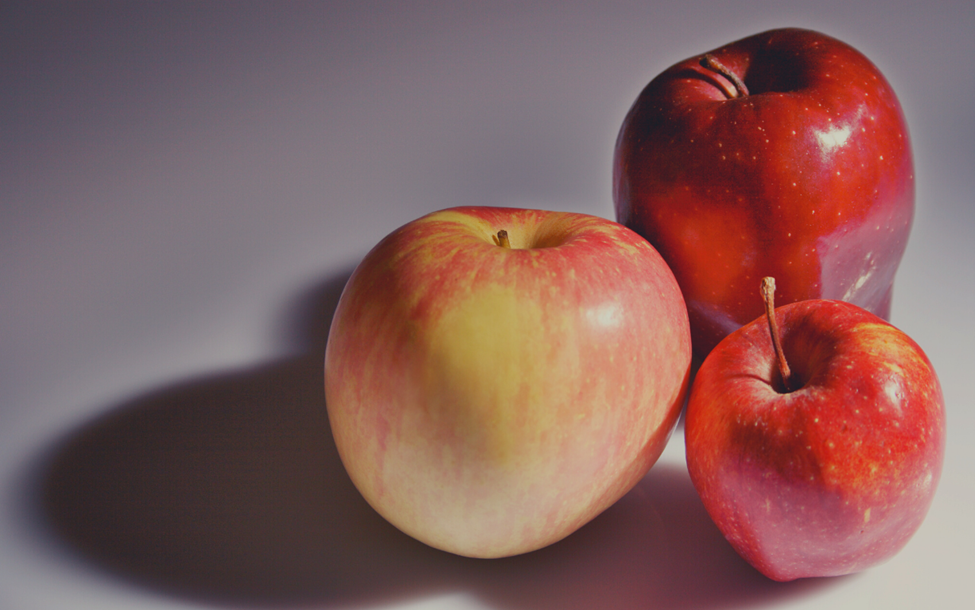
Direct Answer: How Much Does One Apple Weigh? One medium apple weighs about 182 grams — that’s 6.4 ounces or 0.4 pounds. This is the go-to reference for a raw apple with skin in U.S. nutrition data.
In real life, whole apples range from about 100–250 grams. Extra-small ones hover near 100 g, while big supermarket apples can top 220 g. The exact weight depends on variety, maturity, water content, growing conditions, storage, and whether you’re weighing the whole thing or just the part you eat.
Why “One Apple” Isn’t a Fixed Weight Most articles stop at “a medium apple weighs 182 g.” That number is helpful for nutrition estimates, but it’s not a universal rule — it’s a reference portion.
Apples are living things, not identical factory products. A 2025 study on apple quality points out that cultivar and growing environment make a big difference in size, firmness, and appearance.
“Medium” is a consumer word. The produce industry uses more precise systems. U.S. grade standards focus on diameter and allow size marking by count or diameter, with some natural variation built in.
Core Apple Weight Benchmarks
| Apple Size | Approx. Whole Weight | Approx. Ounces | Best Use |
|---|---|---|---|
| Extra small | 100–120 g | 3.5–4.2 oz | Lunch boxes, snacks for children |
| Small | 130–150 g | 4.6–5.3 oz | Light snack, salads |
| Medium | 170–190 g | 6.0–6.7 oz | Nutrition tracking, standard recipes |
| Large | 210–250 g | 7.4–8.8 oz | Baking, slicing, juicing |
| Very large | 250 g+ | 8.8 oz+ | Retail display, fresh eating, fewer pieces per recipe |
These are practical estimates. The most reliable single number is still 182 g for a medium apple because it ties directly to widely used nutrition data.
What Actually Determines Apple Weight? Weight comes down to volume × density. Volume depends on size and shape. Density comes from water content, air pockets in the flesh, cell structure, sugar levels, and the specific variety.
Bigger apples usually weigh more, but it’s not perfect. A dense, round apple can outweigh a wider but fluffier one. That’s why professional grading doesn’t rely only on looks.
U.S. standards measure diameter differently for minimum and maximum sizes, and apples aren’t perfect spheres — tall, flat, or round ones can look similar but weigh differently.

Why the Same “Medium Apple” Weighs Differently Across Sources Different websites list different numbers because they’re often talking about slightly different things: whole apple with skin, sliced, chopped, edible portion only, or a commercial size category.
Always check what the weight actually refers to. A whole medium apple might be 182 g, but after coring you’re often down to 150–160 g. A cup of sliced apples weighs differently again because of air gaps.
Internationally, the Codex Standard for Apples lets size be measured by maximum equatorial diameter or by weight. General minimum is 60 mm or 90 g, with an exception for sweeter smaller fruit that hits the required Brix level.
Count, Diameter, or Weight — Which Works Best?
| Method | What It Measures | Best For | Hidden Trade-Off |
|---|---|---|---|
| Counting apples | Number of fruit units | Shopping, lunch packing | Ignores size variation |
| Diameter | Visual size and pack fit | Grading, display, sorting | Misses density and shape differences |
| Whole weight | Total fruit mass | Buying, yield planning | Includes core and stem |
| Edible weight | Usable flesh | Recipes, nutrition accuracy | Requires trimming or estimation |
| Box count | Commercial pack size | Wholesale and shipping | Not intuitive for consumers |
Recipes that say “3 apples” only work well when apple sizes are similar. A pie made with big Honeycrisp apples can end up with hundreds of extra grams compared to smaller lunchbox varieties. Weight gives you much better control over moisture, sweetness, and baking time.
Washington State University notes that a 40 lb (18,160 g) box divided by fruit count gives the average — a 100-count box lands right around 181.6 g per apple.
Downstream Impact When average apple weight changes, it ripples through recipe performance, nutrition tracking, and procurement costs. The same count can mean different amounts of water, sugar, fiber, and edible mass.
A school serving “one apple per student” controls count but not carbs. A bakery using “ten apples per batch” might end up with wetter filling if the apples are larger or juicier. Retailers buying by carton care more about meeting pack standards than individual weights.
The Apple Weight Decision Matrix
| Use Case | Best Measurement | Why It Works | When It Fails |
|---|---|---|---|
| Casual snack | One whole apple | Fast and practical | Poor for calorie precision |
| Weight-loss tracking | Edible grams | Matches actual intake | Requires scale and trimming |
| Apple pie | Peeled/cored grams | Controls moisture and filling volume | Takes more prep time |
| School lunch | Count + size band | Easy distribution | Nutrient variation remains |
| Grocery procurement | Carton count + grade | Matches logistics and display needs | Does not predict edible yield perfectly |
| Juicing or sauce | Whole weight + yield test | Captures processing input | Variety affects juice and pulp output |
The “right” measurement always depends on what you’re trying to achieve. Nutrition, baking, shipping, and retail each need a different kind of precision.
Success Metrics Professionals Use
- Average fruit weight: Mean grams per apple in a lot — helps predict carton count, serving size, and recipe yield.
- Size uniformity tolerance: Variation between smallest and largest apples — affects pack quality and retail appeal.
- Edible yield percentage: Flesh weight after core, peel, or trim — determines real ingredient cost.
- Recipe moisture variance: Change in water contribution by batch — affects baking texture, sauce thickness, and cook time.
- Portion-weight accuracy: Difference between planned and served grams — improves nutrition tracking and institutional control.
Quick Conversions for Everyday Use
- 1 medium apple: about 182 g
- 1 lb of apples: about 2–3 medium apples
- 1 kg of apples: about 5–6 medium apples
- 1 medium apple edible portion: roughly 150–160 g after coring
- 100-count commercial apple: about 182 g average (based on a 40 lb box)
For recipes: If it’s forgiving (like a casual crumble), counting is fine. If moisture matters — pies, tarts, sauces, dried chips, or baby food — weigh the prepared fruit.
Practitioner Insight In practice, apples with similar diameter can give very different edible yields after peeling, coring, bruising, and trimming. That’s why many pros specify prepared weight, like “600 g peeled and sliced apples,” instead of “4 apples.”
This matters even more in food service, where a prep cook trims more from bruised fruit than a home cook does. The same starting count can turn into noticeably different final weights.
Should You Weigh Apples Before or After Coring? Some nutrition pros prefer whole apples because databases reference them that way and it’s quicker for daily tracking.
Recipe developers and manufacturers usually weigh the prepared edible portion for better control over texture, sweetness, and yield. Whole weight is faster; prepared weight is more accurate.
Limitations and Risks Weight doesn’t directly tell you about sweetness, crispness, or flavor. A heavy apple might just have more water. Codex even allows smaller fruit if it’s sweet enough.
Storage makes a difference too — apples lose moisture over time, so the same apple can weigh less after sitting in your fridge. And variety plus growing conditions always play a big role. No single chart fits every apple perfectly.
FAQ
How much does a medium apple weigh? A medium apple weighs about 182 g, or 6.4 oz, based on common nutrition-reference data.
How many apples are in a pound? Usually 2 to 3 medium apples make one pound. Small ones may take 3 to 4; large ones may need only 2.
How much does an apple weigh without the core? A medium 182 g apple often gives about 150–160 g of edible flesh after coring, depending on trimming and core size.
Is apple weight the same as apple size? No. Size usually means diameter or visual category, while weight is mass. Two apples with similar diameter can differ in weight because of density, shape, and water content.
How much does a large apple weigh? A large apple commonly weighs about 220–250 g, though some very large ones can exceed that.
How much does a small apple weigh? A small apple often weighs about 130–150 g. Extra-small apples may be closer to 100 g.
Should I weigh apples for baking? Yes, for pies, tarts, sauces, and dried apples, weigh the prepared fruit after coring and peeling if the recipe depends on moisture balance.
What is the industry standard for apple sizing? Internationally, Codex allows apple size to be determined by diameter or weight, with a general minimum of 60 mm or 90 g and a smaller-fruit exception tied to Brix.
Wrapping It Up One apple usually weighs about 182 grams when we’re talking about a medium raw apple. But the more useful answer is always contextual: use whole weight for shopping, edible weight for nutrition, prepared weight for recipes, and box-count thinking for bulk buying.
Apple weight isn’t just a random food fact — it’s a practical measurement choice that quietly affects your nutrition estimates, recipe success, shopping decisions, and how consistent your results turn out to be. Happy apple picking!