
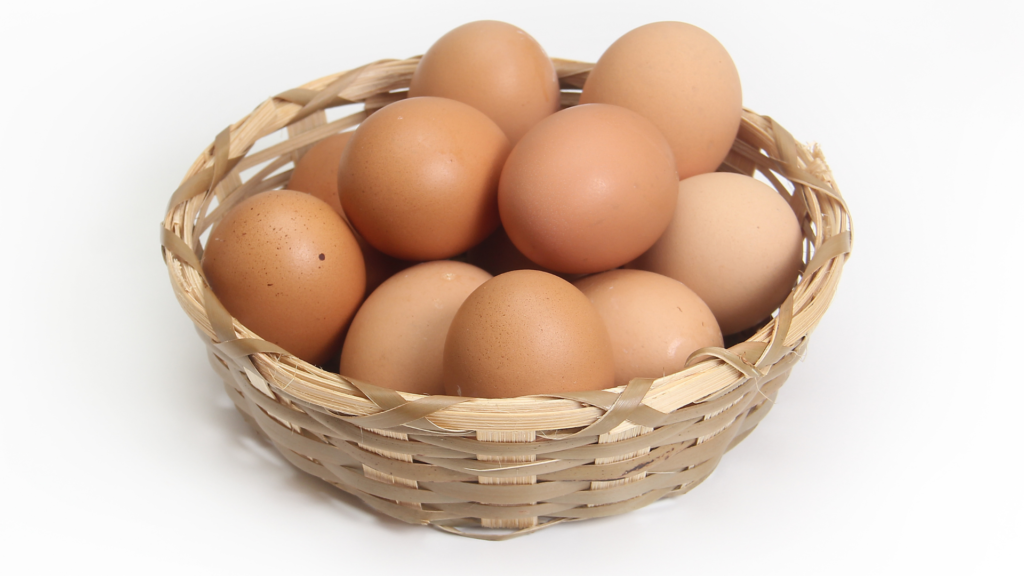
Is Egg a Vegetable, Fruit, Meat or What?
Executive Summary
Here’s the short, straight answer: An egg is not a vegetable, not a fruit, and not meat. In nutrition systems like USDA MyPlate, eggs belong in the Protein Foods Group, where one egg counts as a 1-ounce equivalent of protein food.
Biologically, an egg is an animal reproductive cell structure—usually from a bird—made up of yolk, white, membranes, and shell. It’s not plant tissue and it’s definitely not muscle tissue.
A lot of people casually call eggs “meat,” but that’s usually imprecise. Eggs come from animals, sure, but meat generally refers to animal flesh or muscle. Eggs are their own category of animal product.
Eggs aren’t fruit either. A botanical fruit is the mature ovary of a flowering plant that encloses seeds. Eggs come from animals, not plants.
And they’re not vegetables because vegetables are edible plant parts—leaves, stems, roots, bulbs, or flowers. There’s zero plant tissue in an egg.
One detail most articles miss: For U.S. allergen labeling, the FDA’s 2025 guidance expanded “eggs” as a major allergen to include eggs from chickens, ducks, geese, quail, and other fowl—not just chicken eggs.
Practical takeaway: It all depends on context. In nutrition, eggs are protein foods. In vegetarian ethics, they fit in ovo-vegetarian diets. Vegans skip them. In food safety and labeling, they’re a regulated animal-derived allergen.
The most precise label? An egg is an animal-derived protein food and reproductive product—but not meat, fruit, or vegetable.
Industry Hub Mapping: Where Egg Classification Fits
Egg classification touches so many different worlds: nutrition science, culinary use, food labeling, religious diets, vegetarian ethics, agriculture, and allergen rules.
A dietitian looks at whether an egg delivers protein, fat, micronutrients, and cholesterol. A chef cares if it binds, emulsifies, foams, enriches, or sets when heated. A food manufacturer needs to know if it must be declared as an allergen. A vegetarian consumer wants to know if it crosses an animal-product line. A botanist simply says it’s not a fruit or vegetable because it’s not plant tissue.
For everyday nutrition in the United States, the “north star” is USDA MyPlate. It puts eggs squarely in the Protein Foods Group alongside seafood, lean meats, poultry, beans, peas, lentils, nuts, seeds, and soy. And yes—one egg equals 1 ounce of protein foods.
For packaged foods, the FDA’s allergen labeling guidance is what matters. It treats egg as one of the major food allergens and now interprets it broadly to cover eggs from chickens, ducks, geese, quail, and other fowl.
Direct Answer
An egg is neither a vegetable, fruit, nor meat. It’s best classified as an animal-derived protein food. Biologically, it’s a reproductive structure produced by female animals—most commonly birds in the food world. Nutritionally, it sits with protein foods, not vegetables, fruits, grains, or dairy.
The confusion usually comes from trying to use one classification system for everything. “Fruit” and “vegetable” are plant categories. “Meat” is a culinary and anatomical term tied to animal flesh. “Protein food” is a nutrition category. Eggs fit cleanly into that last one while still being an animal product.
Context: Why People Ask This Question
The question seems simple, but it actually highlights how messy food classification can be. Foods don’t follow one universal rule. A tomato is botanically a fruit but culinarily a vegetable. A peanut is botanically a legume but often grouped with protein foods nutritionally. An egg is even more unique—it’s animal-derived but not flesh.
Most quick answers just say “Eggs are protein.” That’s correct for nutrition, but it’s incomplete. Eggs are protein foods in dietary guidance, animal products in ethical diets, allergens in labeling law, and reproductive structures in biology.
This matters because people ask for all kinds of reasons—meal planning, vegetarian diets, religious rules, allergy labeling, school nutrition, or simple curiosity. The right answer depends on which lens you’re using.
Core Concepts: Why Egg Is Not a Vegetable, Fruit, or Meat
Egg Is Not a Vegetable Vegetables are edible parts of plants—roots, leaves, stems, bulbs, flowers, or immature fruits used in savory cooking. Think lettuce, carrots, onions, broccoli, or asparagus.
An egg comes from an animal and contains albumen, yolk, membranes, and shell. None of that is plant tissue.
The common quick answer is “Egg isn’t a vegetable because it comes from a chicken.” The deeper reason is that vegetable classification is based on plant anatomy—and eggs don’t even come close.
Egg Is Not a Fruit Botanically, a fruit is the fleshy or dry ripened ovary of a flowering plant that encloses seeds (thanks, Britannica).
Eggs don’t come from flowering plants, don’t develop from plant ovaries, and don’t enclose plant seeds. Even though a chicken egg supports animal reproduction, that doesn’t make it a fruit. “Seed-bearing” works very differently in animals and plants.
People often say “Egg isn’t fruit because it’s not sweet.” Sweetness isn’t the test—tomatoes, cucumbers, corn, and beans are botanical fruits too. The real test is plant reproductive anatomy, and eggs are nowhere near it.
Egg Is Not Meat This one’s trickiest. Eggs come from animals, but meat usually means edible animal flesh, especially muscle tissue. A boiled egg is animal-derived, but it’s not the same as chicken breast, beef, pork, or fish fillet.
The casual view is “Egg is meat because it comes from an animal.” The refined take: Animal-derived doesn’t automatically equal meat. Milk, honey, gelatin, and eggs all raise their own classification questions. Eggs are animal products, but not meat in the usual culinary or anatomical sense.
Mechanism: What an Egg Actually Is
A food egg (like a chicken egg) is basically a biological package. The white gives water and protein, the yolk supplies fat and nutrients, and the membranes plus shell offer protection. The whole thing is designed to support reproduction if fertilized and incubated properly.
Most eggs you buy are unfertilized—they’re not developing embryos. That’s important because some people assume every egg could become a chick. Commercial table eggs are produced without fertilization, so they’re reproductive products, not baby animals.
In the kitchen, eggs act differently from meat or vegetables because their proteins coagulate when heated. That’s why they set into custards, omelets, cakes, sauces, and coatings. Their “protein food” label isn’t just paperwork—it matches how they actually behave.
Comparative Evaluation
| Category | Does Egg Belong? | Why | Better Classification |
|---|---|---|---|
| Vegetable | No | Vegetables are plant parts; eggs are animal-derived | Not applicable |
| Fruit | No | Fruits are mature plant ovaries enclosing seeds | Not applicable |
| Meat | Usually no | Meat generally means animal flesh or muscle tissue | Animal product |
| Dairy | No | Dairy comes from milk of mammals; eggs come from birds or other egg-laying animals | Not dairy |
| Protein food | Yes | USDA MyPlate counts 1 egg as 1 ounce equivalent of protein food | Protein Foods Group |
| Allergen category | Yes | Egg is treated as a major food allergen in U.S. labeling guidance | Major allergen |
Downstream Impact
Changing how we classify eggs affects real-world food labeling and manufacturing. Allergen rules drive ingredient declarations, “Contains” statements, sanitation controls, and cross-contact prevention.
The FDA’s broader view of “egg” means companies must account for duck, goose, quail, and other fowl eggs—not just chicken. A bakery using duck eggs in a premium pastry can’t treat them as a niche ingredient outside normal egg allergen rules. That ripples through procurement, packaging, supplier docs, allergen matrices, and production schedules.
Proprietary Comparison Table: Classification by Use Case
| Use Case | Best Label for Egg | What This Prevents | Hidden Trade-Off |
|---|---|---|---|
| Nutrition planning | Protein food | Avoids wrongly counting eggs as vegetables or dairy | Ignores ethical/religious concerns |
| Vegetarian diet discussion | Animal-derived, ovo-vegetarian compatible | Separates eggs from meat | Does not satisfy vegan standards |
| Food labeling | Major allergen | Protects egg-allergic consumers | Requires strict supplier and label control |
| Culinary formulation | Binder, emulsifier, coagulating protein | Explains why eggs behave differently from meat | Function may matter more than food group |
| Biology education | Animal reproductive structure | Avoids plant-based fruit/vegetable confusion | Sounds less useful for meal planning |
| Religious or cultural diet | Context-dependent animal product | Avoids overgeneralizing | Rules differ by tradition and authority |
Success Metrics Professionals Use
- Classification accuracy: Whether egg is assigned to the correct category for the task. Prevents nutrition, labeling, or menu errors.
- Allergen declaration accuracy: Whether egg ingredients are correctly identified on labels. Reduces consumer risk and regulatory exposure.
- Recipe substitution success: Whether egg replacement matches binding, foaming, or emulsifying function. Important for vegan, allergy-safe, or cost-controlled products.
- Menu compliance rate: Whether menus align with vegetarian, vegan, school, or institutional rules. Prevents consumer complaints and policy violations.
- Cross-contact control: Whether egg residue is prevented from contaminating egg-free foods. Critical for allergen-sensitive production.
Practical Insights
For everyday eating, keep it simple: count eggs as protein. Don’t treat them as vegetables, fruits, dairy, or meat.
In vegetarian diets, it gets more specific. People who eat eggs but skip meat are often called ovo-vegetarians. Those who eat eggs and dairy but no meat are lacto-ovo vegetarians. Vegans avoid eggs because they’re animal-derived.
For food businesses, this isn’t philosophy—it’s compliance. FDA guidance requires major allergens to be declared by food source, and the updated rules include eggs from various birds.
In cooking, treat eggs as a functional ingredient. They bind meatballs, emulsify mayo, trap air in cakes, thicken custards, glaze pastry, and set with heat. That functional role often matters more than any food-group label.
Field Note: Practitioner Insight
While theory says “just call them protein foods,” real life gets complicated at menus and labels. Customers mix moral, religious, allergy, and nutrition meanings. A helpful fix is labeling dishes clearly: “contains egg,” “vegetarian but not vegan,” or “egg-based protein.” It avoids forcing a false meat-or-vegetable choice.
Expert Disagreement: Is Egg “Non-Vegetarian”?
Experts and communities don’t always agree because they’re using different standards.
One side says eggs are non-vegetarian because they come from animals and are part of animal reproduction. This view is common in stricter ethical, religious, or cultural frameworks.
The other side says eggs are vegetarian (but not vegan) when unfertilized and no animal flesh is eaten. This is standard in lacto-ovo vegetarian diets that allow eggs and dairy but exclude meat, poultry, and fish.
The real disagreement isn’t about egg biology—it’s about where the boundary is drawn: animal flesh, animal-derived food, potential life, or harm-reduction ethics.
Limitations and Risks
Classifying eggs doesn’t tell us if they’re healthy for every person. That depends on your overall diet, medical history, cooking method, and how much you eat. A boiled egg in a balanced meal isn’t the same as a fried egg with processed meats and refined carbs.
It also doesn’t solve allergy risks. Egg-allergic people need clear ingredient and allergen labeling, not just broad food-group talk.
Finally, food categories vary by country, religion, and institution. A school meal program, temple kitchen, airline, hospital, or vegan certifier may handle eggs differently for their own practical reasons.
FAQ
Is egg a vegetable? No. A vegetable is an edible plant part, while an egg is produced by an animal.
Is egg a fruit? No. A fruit is the mature ovary of a flowering plant that encloses seeds; an egg is not plant tissue.
Is egg meat? Usually no. Egg is animal-derived, but meat generally refers to animal flesh or muscle tissue.
What food group is egg in? In USDA MyPlate guidance, eggs are in the Protein Foods Group. One egg counts as a 1-ounce equivalent of protein food.
Is egg dairy? No. Dairy comes from milk, usually from mammals such as cows, goats, or sheep. Eggs come from birds or other egg-laying animals.
Can vegetarians eat eggs? Some vegetarians eat eggs, especially ovo-vegetarians or lacto-ovo vegetarians. Vegans do not eat eggs because eggs are animal-derived.
Are eggs considered an allergen? Yes. Egg is treated as a major food allergen under U.S. food labeling rules, and FDA guidance includes eggs from chickens, ducks, geese, quail, and other fowl.
Conclusion
An egg is best described as an animal-derived protein food. It’s not a vegetable because it’s not a plant part. It’s not a fruit because it’s not a mature plant ovary enclosing seeds. And it’s not meat in the usual sense because it’s not animal flesh or muscle tissue.
The most accurate answer always depends on context: nutrition calls it protein, biology calls it an animal reproductive structure, ethics calls it an animal product, and regulation treats it as a major allergen.
At the end of the day, egg is its own category of animal-derived food—grouped nutritionally with protein foods, not with fruits, vegetables, meat, or dairy.