
Quick Takeaways
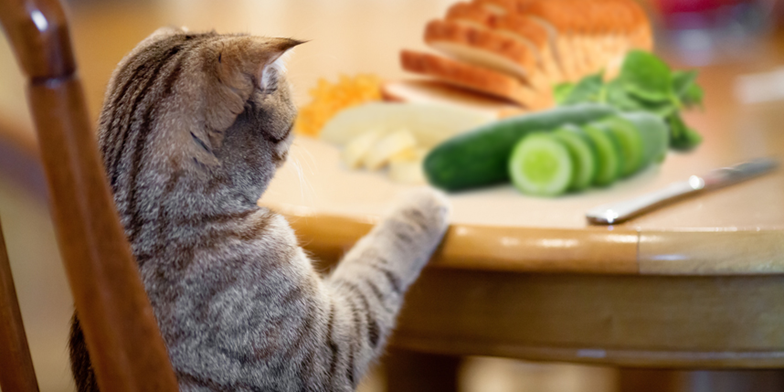
Here’s the direct answer: Cats should not be fed a homemade vegetarian diet, and a fully vegetarian or vegan main diet isn’t currently recommended unless it’s a commercially formulated, nutritionally complete product used under veterinary guidance.
Cats are obligate carnivores, meaning their bodies require specific nutrients that are naturally concentrated in animal tissues—like taurine, arachidonic acid, preformed vitamin A, and higher levels of certain amino acids.
The real question isn’t really “meat versus plants.” It’s whether the final food reliably delivers every required nutrient in the correct ratio, for the right life stage, with good digestibility and a solid long-term safety profile.
Most articles stop at “cats need meat.” The more useful answer is a bit more technical: cats need the right nutrient outcomes, but current plant-based cat diets often come with a narrower safety margin because deficiencies can take months to show up.
Look for that AAFCO “complete and balanced” statement on the label as a starting point, but remember it’s not the same as independent batch testing, long-term feeding evidence, or knowing it’s right for a cat with kidney issues, urinary problems, pregnancy, growth needs, or a picky appetite.
Recent owner-reported studies on vegan-fed cats have suggested similar or even better health outcomes in some cases, but many of those results aren’t statistically significant and rely heavily on guardian reports rather than long-term controlled clinical trials.
A 2020 analysis of vegan pet foods found nutritional inadequacies in the products tested—which is exactly why label claims and formulation quality matter more than good intentions.
The safest practical position? Vegetarian foods can be occasional treats if they’re cat-safe, but your cat’s primary diet should be a complete, balanced feline food chosen with your veterinarian.

Direct Answer: Can Cats Eat Vegetarian Food?
Cats can enjoy some vegetarian foods in tiny amounts as treats, but they shouldn’t live on a vegetarian diet unless it’s a professionally formulated, complete-and-balanced feline food and your veterinarian agrees it’s appropriate for your individual cat.
Giving your cat a bit of plain cooked pumpkin, rice, carrot, or a small piece of egg is very different from relying on plants as the main source of nutrition.
The common view is straightforward: “No, cats can’t be vegetarian.” The more precise insight is this—cats can’t safely depend on an unbalanced vegetarian pattern because their metabolism requires nutrients that plants don’t naturally provide in usable amounts. Cornell’s feline nutrition guidance describes cats as obligate carnivores that rely on nutrients found in animal products, while Merck notes that cats require dietary sources of vitamin A, arachidonic acid, taurine, and higher levels of some amino acids.

Where This Topic Fits in the Bigger Picture
Vegetarian cat food touches several professional areas:
- Veterinary medicine: looking at body condition, muscle condition, dental health, heart health, urinary health, gastrointestinal tolerance, and life-stage risks.
- Pet food regulation: AAFCO in the United States and FEDIAF in Europe set nutrient profiles and labeling expectations for complete pet foods.
- Nutrition science: formulation has to account for amino acids, fatty acids, minerals, vitamins, digestibility, processing losses, and ingredient variability.
- Consumer ethics and sustainability: many owners explore vegetarian cat food because of animal welfare or environmental concerns.
- Retail and labeling: “plant-based,” “vegetarian,” “natural,” and “premium” are marketing terms. “Complete and balanced” is the claim that actually matters for nutrition.
The regulatory side: Any change in pet food formulation affects compliance. Manufacturers must substantiate nutritional adequacy through recognized nutrient profiles or feeding protocols. AAFCO explains that “complete” means all required nutrients are present, and “balanced” means they’re in the correct ratios.
Why This Question Is Trickier Than It Seems
Most search results give one of two answers. Traditional veterinary sources say cats are obligate carnivores and shouldn’t eat vegetarian diets. Vegan pet food advocates point out that synthetic nutrients can replace animal-derived ones if the formula is complete. Both have truth to them, but both can oversimplify the risks.
The common view: Cats need meat, so vegetarian food is automatically unsafe. The refined insight: Cats need a dependable package of nutrients, not moral categories. Still, because many critical feline nutrients are naturally tied to animal sources, vegetarian formulations have less room for error. A poorly made meat-based diet can be unsafe too, but poorly designed vegetarian cat diets tend to fail in predictable ways—taurine, arachidonic acid, vitamin A, minerals, protein quality, palatability, and urinary pH.
The British Veterinary Association’s 2024 policy position offers a balanced recent take: it acknowledges interest in vegan and vegetarian diets, notes some positive studies, but says current evidence is small-scale and often owner-reported. More long-term controlled research is needed, and the evidence doesn’t yet support creating complete vegan or vegetarian diets for cats with full confidence.
What Cats Need That Vegetarian Diets Often Miss
Cats evolved as hunters. Their bodies aren’t just “protein-preferring”—they’re metabolically tuned to prey-style nutrition. That becomes important when key nutrients are missing.
Here are the key feline nutrients that matter:
| Nutrient | Why cats need it | Vegetarian diet challenge |
|---|---|---|
| Taurine | Heart, retina, reproduction, bile acid function | Naturally concentrated in animal tissue; must be reliably supplemented in plant-based formulas |
| Arachidonic acid | Skin, reproduction, inflammatory signaling | Cats require a dietary source; plants generally do not provide it in the same way |
| Preformed vitamin A | Vision, immunity, epithelial tissue | Cats cannot depend on beta-carotene conversion the way dogs and humans can |
| Arginine | Ammonia detoxification via the urea cycle | Cats have high amino acid needs and low tolerance for deficiency |
| Protein quality | Maintenance of lean mass and enzymes | Total protein number does not guarantee amino acid balance or digestibility |
Merck’s veterinary nutrition guidance specifically lists vegetarian diets among the feeding patterns linked to nutritional problems in cats, along with dog food, unbalanced homemade diets, and unusual ingredient patterns.
Why “A Little Vegetarian Food” Is Different From “A Vegetarian Diet”
A cat nibbling on cooked peas or pumpkin isn’t the same nutritional event as a cat eating vegetarian kibble for 100% of its calories.
Cats can digest some carbohydrates and plant ingredients—many commercial cat foods already include grains, legumes, starches, or fiber sources. Cornell notes that dry foods may contain grain byproducts, fiber sources, milk products, and vitamin-mineral supplements alongside meat or poultry.
The risk shows up when plant foods start displacing the complete feline diet. Once treats, scraps, or alternatives go beyond roughly 10% of daily calories, they can dilute essential nutrients. Your cat may feel full while getting less taurine, less usable protein, lower moisture, altered mineral balance, or a wrong calcium-to-phosphorus ratio.
Common view: Vegetarian food is poisonous to cats. Refined insight: Most plain vegetarian foods aren’t poisonous in tiny amounts—they’re just nutritionally incomplete. The real danger is chronic substitution, not one bite of cooked carrot.
Comparing the Options: Vegetarian, Vegan, Meat-Based, and Hybrid
The decision should come down to nutritional adequacy, evidence quality, and your individual cat’s risk.
| Diet type | Main advantage | Main risk | When it may be reasonable | When it fails |
|---|---|---|---|---|
| Standard complete meat-based cat food | Long history of use; easier to meet feline nutrient needs | Quality varies; some formulas may not suit allergies, urinary issues, or obesity | Most healthy cats | If chosen by marketing claims instead of nutritional adequacy |
| Vegetarian treats only | Lets owners share safe plant foods occasionally | Nutrient dilution if overfed | Tiny portions of cat-safe foods | If treats become meal replacements |
| Commercial vegetarian/vegan complete cat food | Attempts to meet nutrient needs through formulation and supplementation | Narrower safety margin; limited long-term controlled evidence | Only with veterinary guidance and monitoring | Kittens, pregnant cats, sick cats, poor eaters, urinary-risk cats unless supervised |
| Homemade vegetarian cat diet | Owner control over ingredients | Very high deficiency risk | Rarely appropriate; only with board-certified veterinary nutritionist formulation | Almost always unsafe without expert formulation |
| Prescription therapeutic diet | Designed for specific diseases | May conflict with owner ethics or preferences | Kidney, urinary, GI, allergy, obesity cases | If replaced with an ethical diet that does not manage the disease |
Some vets emphasize species biology and advise against plant-based diets because the evidence base is limited and deficiencies can be serious. Others, including plant-based pet food advocates, argue that if nutrients are chemically identical and verified, the source matters less than the finished profile. The real disagreement is often about confidence level and monitoring rather than philosophy.
The Hidden Trade-Offs
Here’s a quick look at the practical differences:
| Decision factor | Meat-based complete diet | Commercial plant-based complete diet | Homemade vegetarian diet | Non-obvious insight |
|---|---|---|---|---|
| Nutritional safety margin | Higher | Medium to low, depending on testing | Low | “Complete” is a starting claim, not proof of long-term individual suitability |
| Ethical alignment for vegetarian owners | Lower | Higher | Higher | Owner values can improve compliance, but they cannot replace nutrient verification |
| Palatability | Usually high | Variable | Variable | A nutritionally correct food still fails if the cat refuses it |
| Urinary management | Many tested options | Fewer options | Hard to control | Mineral balance and urine pH matter as much as protein source |
| Evidence depth | Long commercial history | Emerging, mixed, often survey-based | Weak | Absence of obvious illness is not the same as confirmed adequacy |
| Veterinary oversight need | Routine | Higher | Very high | The more unconventional the diet, the more monitoring becomes part of the diet |
What This Means for Your Cat’s Health
Switching a cat’s primary protein source can affect urinary health because protein type, mineral content, moisture, and urine pH all influence the urinary environment. That may require changes in food choice, water intake, litter box monitoring, and vet testing—especially for cats with a history of crystals, cystitis, or blockages.
It can also affect the trust between you and your vet. If you hide a vegetarian diet out of fear of judgment, your vet misses important diet history when interpreting weight loss, vomiting, poor coat, heart signs, or lab results. WSAVA’s nutrition guidance stresses that nutrition assessment is a key part of veterinary care, so being open really matters.
How to Tell If Your Cat’s Diet Is Working
Professionals look at these practical signs:
- Body Condition Score and Muscle Condition Score: Fat stores and lean mass over time. Cats can look “normal weight” while losing muscle.
- Food intake consistency: Daily calories actually consumed. A perfect formula fails if the cat eats too little.
- Coat, stool, and vomiting pattern: Digestive tolerance and visible nutrient response. Early warnings often appear before serious issues.
- Veterinary exam and lab trends: Heart, kidney, liver, urinary, and metabolic status. These catch problems you can’t see at home.
- Label adequacy verification: AAFCO/FEDIAF life-stage statement, feeding trial status, manufacturer testing. This separates marketing from real substantiation.
A Simple Decision Framework
Use this practical approach:
If your cat is a kitten, pregnant, nursing, a senior with disease, underweight, diabetic, kidney-compromised, urinary-prone, or eating poorly—don’t experiment with vegetarian feeding without direct veterinary supervision.
If your cat is healthy and you want to reduce meat use, start with lower-risk steps: cut food waste, avoid overfeeding, choose companies with transparent sourcing, stick with complete diets that have good quality control, and keep vegetarian items as occasional treats only.
Considering a commercial vegetarian or vegan cat food? Check these five things first:
- It’s labeled complete and balanced for cats, not dogs.
- It matches your cat’s life stage.
- The company can explain whether adequacy is based on nutrient profiles, feeding trials, or both.
- The manufacturer does finished-product nutrient testing, not just recipe calculation.
- Your veterinarian agrees on a monitoring plan.
AAFCO reminds us that treats and snacks usually don’t need to meet complete-and-balanced standards.
A Note From Practice
In theory, synthetic taurine, vitamin A, and other nutrients can make a vegetarian cat food adequate. In real life, challenges often appear at the verification and adherence stage—owners mix diets, add extra treats, switch brands, or feed less than recommended when the cat doesn’t love it. The smart move is to treat any unconventional diet like a monitored nutrition plan: track the exact product, daily amount, weight trends, stool quality, appetite, and schedule regular vet rechecks instead of relying on the label alone.
Important Limitations and Risks
The biggest gap in this area is evidence quality. Owner-reported studies can spot patterns, but they can’t replace controlled feeding trials, blood nutrient tests, long-term heart and eye monitoring, or disease-specific research. A 2023 PLOS ONE study found that cats on vegan diets had favorable reported outcomes, but many differences weren’t statistically significant and relied on guardian reports.
A 2020 PLOS ONE study on vegan foods for dogs and cats found nutritional inadequacies in the tested products compared to AAFCO and FEDIAF recommendations.
Also remember that “vegetarian” means different things—lacto-ovo includes egg or dairy, vegan excludes all animal ingredients, and “plant-based” may still use synthetic nutrients. These matter ethically, but your cat’s body cares about nutrient availability, not the label.
FAQ: Can Cats Eat Vegetarian Food?
1. Can cats be vegetarian? Cats should not be treated as natural vegetarians. They are obligate carnivores with nutrient needs that are difficult to meet without animal-derived nutrients or precise supplementation. A vegetarian diet should only be considered if it is complete, balanced, feline-specific, and supervised by a veterinarian.
2. Can cats eat vegan food? A bite of vegan food is not the same as a vegan diet. A full vegan diet for cats remains controversial because it depends on synthetic nutrient supplementation, product quality, palatability, and long-term monitoring. Veterinary groups generally advise caution, especially for cats with medical conditions.
3. Is vegetarian cat food safer than homemade vegetarian meals? Yes, if the commercial product is genuinely complete and balanced for cats. Homemade vegetarian cat diets are high-risk because small formulation errors can create serious deficiencies or mineral imbalances.
4. What vegetarian foods are safe as small treats? Plain cooked pumpkin, carrot, rice, green beans, peas, or a tiny amount of plain cooked egg may be tolerated by some cats. Avoid onions, garlic, chives, grapes, raisins, chocolate, alcohol, caffeine, and heavily salted or seasoned foods.
5. Can cats get enough taurine from plants? Not naturally in reliable feline-required amounts. Vegetarian or vegan cat foods must add taurine and verify that the finished diet contains enough after processing and storage.
6. What happens if a cat does not get enough taurine? Taurine deficiency can contribute to serious problems, including retinal degeneration, heart disease, reproductive issues, and poor growth. The risk is that deficiency may develop gradually before owners notice obvious illness.
7. Is “complete and balanced” enough proof? It is necessary but not always sufficient. It tells you the food is formulated or substantiated to meet recognized nutritional standards, but you should still consider feeding trials, quality control, life stage, medical needs, and veterinary monitoring.
8. What should I do if I already feed my cat vegetarian food? Do not panic or abruptly change everything without a plan. Save the product label, record how much your cat eats daily, schedule a veterinary exam, and ask whether bloodwork, urine testing, weight tracking, or diet transition is appropriate.
Final Thoughts
Cats can enjoy small amounts of cat-safe vegetarian foods as treats, but they shouldn’t rely on a casual vegetarian diet. The safest approach isn’t driven by ideology—it’s based on feline biology, nutrient verification, and good monitoring. Cats need taurine, arachidonic acid, preformed vitamin A, sufficient amino acids, correct mineral ratios, adequate calories, and a food they’ll actually eat consistently.
Meat has traditionally been the main delivery system for feline nutrition, but nutritional adequacy is what really counts. Right now, the evidence and safety margin for vegetarian cat diets are still weaker than for conventional complete feline diets. For most cats, the best choice is a complete, balanced commercial cat food, with vegetarian foods kept as occasional treats.