
The Quick Scoop
The best naturally blue foods are blueberries, wild blueberries, bilberries, blue corn, blue potatoes, butterfly pea flowers, blue spirulina, blue tomatoes, and borage flowers. Some are truly blue; others lean blue-purple because plant pigments shift with pH, heat, light, and processing.
Here’s the thing most lists miss: “blue food” isn’t automatically healthier than red, purple, or black options. What really matters is the pigment system—especially anthocyanins or phycocyanin—not the exact shade.
Blue foods stay rare because stable blue pigments are tricky to maintain in edible plants. Anthocyanins often flip between red, purple, and blue depending on acidity, while phycocyanin from algae can fade under heat, light, or pH changes.
On the practical side, blueberries (or wild ones) win for everyday eating, butterfly pea flower is your best culinary color tool, and algae-derived phycocyanin is becoming the go-to for processed foods.
Important note: Anthocyanin-rich foods support a healthy diet, but they’re not miracle cures. Results depend on your overall eating pattern, portion sizes, and how the food is prepared.
Where Naturally Blue Foods Fit in Real Life
Naturally blue foods live at the crossroads of nutrition, cooking, food science, farming, and rules around labeling. A chef wants to know if butterfly pea tea will stay blue in a latte. A dietitian looks at fiber, polyphenols, or protein. A food manufacturer needs the color to survive pasteurization, shelf life, and light exposure.
Whether you’re a home cook, baker, or just someone who likes pretty plates, understanding these foods helps you use them smarter.
The 9 Best Naturally Blue Foods
Here are the nine standouts, each shining for different reasons—some as everyday whole foods, others as pigment powerhouses or functional color tools.
The key thing to remember? Blue in food is unstable. Many “blue” items are actually blue-purple because their pigments react to pH, heat, oxygen, and light. Anthocyanins can look red in acidic conditions and shift toward blue-purple as pH rises. Phycocyanin from spirulina gives a vivid blue but needs the right conditions to hold its color.
Why Naturally Blue Foods Are So Rare
We often hear that nature just doesn’t make many blue foods. The fuller picture is that nature does produce blue-looking options, but keeping that color stable and edible is chemically tough. Pigments aren’t fixed—they’re dynamic systems that change with acidity, minerals, proteins, heat, and oxygen.
Anthocyanins are the main plant-based family behind blue, purple, red, and black tones in berries, potatoes, corn, grapes, cabbage, and flowers. Their color shifts: more acid pushes them redder, while milder conditions move them toward purple or blue.
That’s exactly why blueberry jam often looks purple, butterfly pea tea turns pink with lemon, and blue corn tortillas can cook up gray-purple. It’s not fake—it’s chemistry in action.
The Two Main Blue Pigment Systems
1. Anthocyanins: the plant-based blue-purple system These flavonoid pigments show up in fruits, grains, tubers, and flowers. They’re responsible for the tones in blueberries, bilberries, blue corn, blue potatoes, blue tomatoes, and butterfly pea flowers. Color depends heavily on pH and the food’s structure.
2. Phycocyanin: the algae-based blue system This is the star in spirulina extract and galdieria extract blue. Spirulina comes from Arthrospira platensis, while galdieria extract comes from Galdieria sulphuraria. Both are approved as color additives for specific uses in the U.S.
Most vivid natural blues in packaged foods actually come from algae-derived phycocyanin rather than fruit.
Let’s Meet the Nine
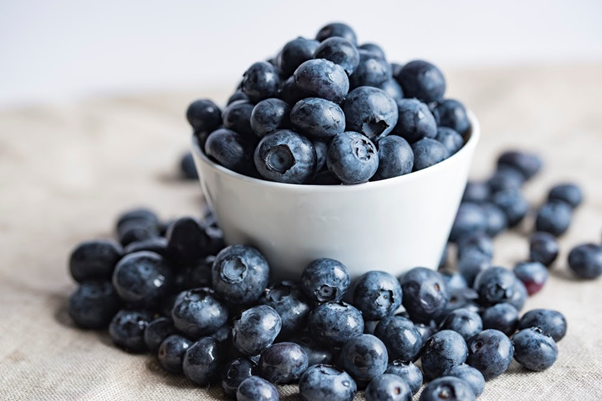
1. Blueberries These are the most accessible naturally blue food. The skin holds most of the anthocyanins, while the inside is usually pale. They’re practical: easy to find fresh, frozen, or dried, and they fit into breakfasts, salads, sauces, and baked goods. You get fiber and polyphenols without any fuss.
Best uses: daily eating, smoothies, oatmeal, yogurt, salads. Limitation: baking and long heating can dull the blue-purple color.
2. Wild Blueberries Smaller than cultivated ones, so they have a higher skin-to-pulp ratio and often deliver more intense blue-purple color in smoothies and sauces.
Best uses: smoothies, compotes, frozen desserts, sauces. Limitation: their strong pigment can turn batters gray-purple instead of bright blue.
3. Bilberries They look like blueberries but are often darker inside, with deeply pigmented flesh that gives a stronger staining effect. More common in Europe as frozen fruit, preserves, juices, or extracts. A 2024 review highlighted their specific anthocyanin profiles and antioxidant properties, though health claims need careful reading since extract studies don’t always match everyday portions.
Best uses: jams, sauces, syrups, desserts. Limitation: harder to find fresh in many places.
4. Blue Corn A great savory option. Anthocyanins in the kernels give it color, and it’s used for tortillas, chips, atole, cornbread, cereals, and snacks.
Note on processing: Nixtamalization (the traditional alkaline process for masa) can reduce anthocyanins. One study showed varying retention depending on the corn variety and method.
Best uses: tortillas, masa, chips, cornbread. Limitation: processed snacks may keep less pigment than the raw grain.
5. Blue Potatoes Also called purple or blue-fleshed potatoes, these have anthocyanins in the flesh and/or skin. The color holds up better with roasting or steaming than boiling.
Best uses: roasted wedges, potato salads, mash with minimal dairy, chips. Limitation: boiling leaches pigments into the water.
6. Butterfly Pea Flowers One of the most useful natural blue tools for drinks and desserts. Made from dried Clitoria ternatea flowers, it’s approved as a color additive exempt from certification. Its big trick is pH sensitivity—add lemon and it shifts to purple or pink. Perfect for color-changing teas, cocktails, and desserts.
Best uses: teas, syrups, rice, cocktails, mocktails, desserts. Limitation: color shifts with acidic ingredients like citrus or yogurt.
7. Blue Spirulina This usually means phycocyanin-rich extract, not whole green spirulina powder. It gives a vivid blue in smoothies, frostings, and cold drinks. It’s regulated under 21 CFR 73.530 with purity limits, including heavy metals and microcystin testing.
Best uses: smoothie bowls, frostings, raw desserts, cold beverages. Limitation: heat and pH can fade the color. Often used more for color than big nutrition at typical amounts.
8. Blue Tomatoes Varieties like Indigo types develop dark blue-purple skin in sunlight. The flesh stays red or purple-red. They combine tomato carotenoids with anthocyanin-rich skin—great example of smart plant breeding.
Best uses: fresh salads, salsas, roasted plates. Limitation: blue is mostly on the skin, so sauces won’t turn fully blue.
9. Borage Flowers Edible star-shaped blue flowers used as garnishes. They have a mild cucumber taste and true blue color that’s hard to get elsewhere. Only use ones grown and sold for eating.
Best uses: garnish on salads, chilled soups, cakes, lemonades. Limitation: delicate, seasonal, and not a major nutrient source.
Why Blue Foods Turn Purple, Pink, or Gray
It usually comes down to pH. Anthocyanins shift: acidic conditions make them redder, milder ones push them purple or blue. Heat, oxygen, enzymes, minerals, and time all play a role too.
You’ll see this in the kitchen when lemon turns butterfly pea tea pink, yogurt makes blue look lavender, or blueberry muffins develop purple-gray spots.
Whole Food vs. Color Ingredient
The “best” choice depends on your goal—nutrition, strong color, stability, or easy labeling.
Here’s a helpful breakdown:
| Blue food | Main pigment | Best for | Hidden trade-off | Practical verdict |
|---|---|---|---|---|
| Blueberries | Anthocyanins | Everyday nutrition | Color dulls with heat | Best daily choice |
| Wild blueberries | Anthocyanins | Stronger color in smoothies | Can gray baked goods | Best frozen option |
| Bilberries | Anthocyanins | Deep sauces and preserves | Harder to source | Best intense berry |
| Blue corn | Anthocyanins | Savory grain foods | Processing can reduce pigment | Best savory staple |
| Blue potatoes | Anthocyanins | Roasting and visual plates | Boiling leaches color | Best tuber |
| Butterfly pea | Anthocyanins | Drinks and color change | Acid shifts color | Best culinary color tool |
| Blue spirulina | Phycocyanin | Bright blue cold foods | Heat/pH sensitivity | Best vivid blue |
| Blue tomatoes | Anthocyanins + tomato pigments | Fresh salads | Skin-dominant color | Best novelty produce |
| Borage flowers | Floral pigments | Garnish | Low calorie contribution | Best natural decoration |
Which Blue Food Should You Use?
- Health-focused daily eating: Blueberries or wild blueberries. Easy, with fiber and polyphenols (though not medicinal on their own).
- Bright blue smoothie bowl: Blue spirulina.
- Color-changing drink: Butterfly pea flower.
- Savory blue ingredient: Blue corn.
- Whole-food dinner plate: Blue potatoes.
- Elegant garnish: Borage flowers.
Practical Tips for Real Kitchens
For home cooks: Reach for blueberries, blue potatoes, and blue corn as actual foods. Save butterfly pea and blue spirulina for color.
Bakers: Expect purple-gray tones in batters. Blue spirulina works better for bright blue frostings in cool, low-acid mixes.
Beverages: Butterfly pea shines when the color shift is part of the fun. For steady blue, control the acidity.
Nutrition angle: Whole foods first. Color amounts of spirulina or butterfly pea often don’t add much nutritional punch.
Whole Foods vs. Natural Color Extracts
Nutrition folks often favor whole foods for the fiber, flavor, and natural matrix. Food technologists prefer concentrated extracts for consistency in big batches. Both approaches make sense depending on whether you’re cooking dinner or producing shelf-stable drinks.
A Few Honest Limitations
“Naturally blue” doesn’t mean automatically healthier or unprocessed. The FDA calls many of these “exempt from certification” rather than simply “natural.”
Also, while anthocyanins are linked to good dietary patterns and antioxidant activity, they’re not cures. Use them as part of a balanced plate.
Some ingredients (like butterfly pea and blue spirulina) are fantastic colorants but deliver tiny nutritional amounts in typical recipes.
FAQ
What foods are naturally blue? The most common ones are blueberries, wild blueberries, bilberries, blue corn, blue potatoes, butterfly pea flowers, blue spirulina, blue tomatoes, and borage flowers.
Why are blue foods so rare? Stable blue pigments are chemically difficult in edible foods. Many shift between red, purple, and blue with pH, heat, and processing.
Are blue foods healthier than other colors? Not automatically. The value comes from anthocyanins or phycocyanin, but overall benefit depends on the whole food, portion, preparation, and your diet.
What is the bluest natural food color? Blue spirulina can create one of the brightest shades in cold, low-acid foods. Butterfly pea flower also gives vivid blue in drinks but changes with acid.
Why does butterfly pea tea turn pink with lemon? Lemon lowers the pH, and the anthocyanins shift from blue toward purple or pink.
Are blue corn chips healthier than regular chips? Not necessarily. The anthocyanins are a plus, but frying, salt, oil, and processing can outweigh it.
Can blueberries make food truly blue? Sometimes, but they often turn things purple or gray when heated or mixed into batters. They’re better for nutrition and flavor.
Is blue spirulina the same as regular spirulina? Not exactly. Blue spirulina usually means phycocyanin-rich extract, while regular powder is green from multiple pigments.
Wrapping It Up
Naturally blue foods are more than just a pretty novelty—they show how chemistry, nutrition, farming, and regulation all come together.
Blueberries and wild blueberries are your easiest daily picks. Bilberries bring deeper color. Blue corn and potatoes add interest to savory meals. Butterfly pea and blue spirulina are fantastic for visuals. Blue tomatoes and borage round things out for special touches.
The smartest way to choose isn’t “which is bluest?” but “which pigment system fits what I’m making?” Pick whole foods for eating, understand pH for drinks, check regulations for packaged items, and always remember: these foods add useful compounds best as part of a varied diet, not as standalone superheroes. Enjoy the color and the flavor!