
Hey there, if you’ve ever stood in the soda aisle wondering whether Dr Pepper is a Coke or Pepsi thing, you’re definitely not alone. It’s one of those questions that sparks endless debate online. Let’s clear it up in a straightforward, no-fluff way.
The Short Answer
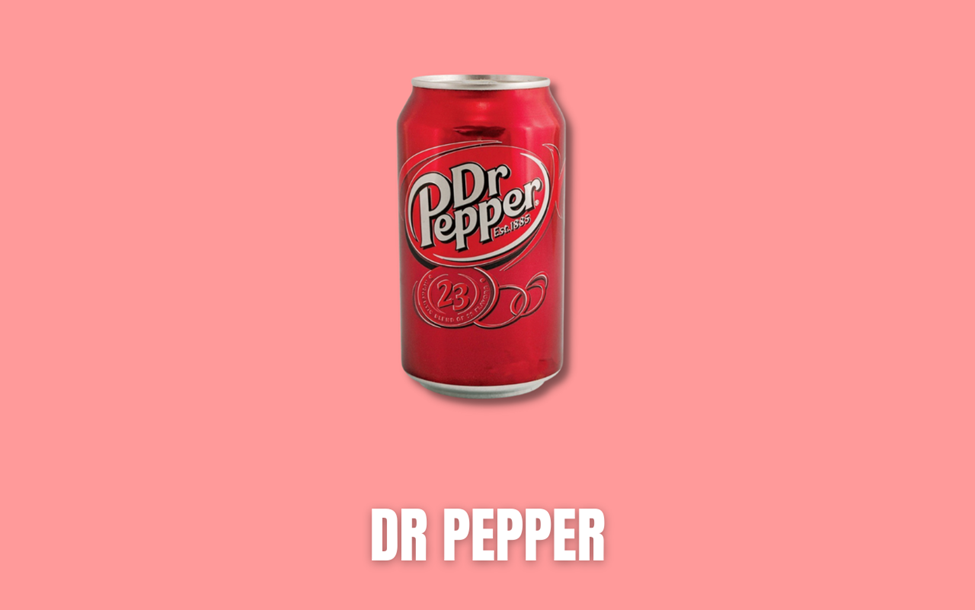
In the United States, Dr Pepper is not a Coke product. It’s owned by Keurig Dr Pepper, not The Coca-Cola Company. Keurig Dr Pepper lists Dr Pepper among its beverage brands and describes its portfolio as owned, licensed, and partner brands.
The confusion makes total sense, though. Coca-Cola has historically distributed Dr Pepper in certain territories and channels, thanks to various bottling agreements in the U.S. and Canada. But distribution isn’t the same as ownership. PepsiCo has also distributed it in some areas, which really drives home the point: Dr Pepper can show up in Coke or Pepsi systems without belonging to either company.
The better question isn’t “Is Dr Pepper Coke or Pepsi?” but “Who owns the trademark, who manufactures it, who distributes it, and in which country?” Because the answer actually changes depending on the market.
In the U.K., for example, Dr Pepper appears in Coca-Cola’s consumer and bottling ecosystem, and Coca-Cola Europacific Partners lists it among its Great Britain brands. That doesn’t mean the U.S. brand is owned by Coca-Cola, though.
A recent development worth noting: Keurig Dr Pepper has been restructuring around beverages and coffee, including the JDE Peet’s deal and planned separation of its beverage and coffee businesses. This actually makes Dr Pepper’s ownership more strategically visible.
At the end of the day, the industry “north star” is brand-rights control, not whatever logo is on the delivery truck, fountain machine, or vending contract.
Where Dr Pepper Fits in the Beverage World
Dr Pepper sits at the intersection of several key beverage-industry functions. Here’s why each one matters:
Brand ownership — Determines who controls the trademark, positioning, formula stewardship, and long-term brand value. Bottling and distribution — Determines who physically produces, warehouses, delivers, and services the product in a territory. Foodservice fountain contracts — Determines whether Dr Pepper appears beside Coke, Pepsi, or independent beverages in restaurants. Retail category management — Determines shelf placement, promotions, pack sizes, and local availability. Trademark and licensing law — Determines who can sell the brand in each country or channel. Investor reporting — Determines which company records revenue, licensing income, distribution costs, and brand performance.
This layered setup is exactly why people get conflicting answers. You might grab Dr Pepper from a Coke-serviced fountain, see it on a Coca-Cola U.K. website, or have it delivered by a Pepsi bottler somewhere else. Those are all channel facts — not universal ownership facts.
Why the Myth Persists
Most quick answers correctly say, “Dr Pepper is owned by Keurig Dr Pepper, not Coke,” and leave it at that. But the full picture is a bit more nuanced.
The confusion comes from how the beverage industry splits responsibilities: brand ownership, bottling rights, distribution rights, and fountain availability can all belong to different companies at the same time.
Back in 2010, Coca-Cola paid Dr Pepper Snapple Group $715 million for rights to distribute Dr Pepper and certain other brands in U.S. and Canada territories where Coca-Cola Enterprises had already been handling them. The license had an initial 20-year term with renewal periods.
PepsiCo struck a similar deal in 2009, paying an upfront $900 million to gain manufacturing and distribution rights in territories previously served by its own bottlers.
So Dr Pepper has always operated on a more complex distribution map than a simple “Coke or Pepsi” label suggests.
Ownership vs. Distribution vs. Fountain Placement
This is the key distinction that clears up most of the confusion:
| Concept | What It Means | Dr Pepper Example |
|---|---|---|
| Brand ownership | Who owns or controls the brand rights | Keurig Dr Pepper in the U.S. |
| Manufacturing | Who produces the beverage in a territory | May be KDP, Coca-Cola, PepsiCo, or another licensed bottler |
| Distribution | Who delivers and services the product | Coke and Pepsi systems have both handled it in certain territories |
| Fountain placement | Which drink appears in a restaurant or theater machine | Dr Pepper may appear beside Coke or Pepsi products |
| Consumer perception | What shoppers assume based on where they see it | Often mistaken for Coke because of fountain or overseas distribution |
A common view is: “If it comes out of a Coke fountain, it must be a Coke product.” The reality? A fountain machine is just a route-to-market tool, not proof of brand ownership. Restaurants often work with one big system but add licensed third-party drinks to keep customers happy.
How Dr Pepper Can Be Sold Through Coke Without Being Coke
Beverage brands often separate rights into different layers:
- Trademark control
- Concentrate or formula control
- Bottling rights
- Distribution rights
- Retail execution
Dr Pepper’s confusion usually kicks in at the bottling and distribution layers. Big players like Coca-Cola and PepsiCo run massive distribution networks, so third-party brands sometimes license those systems instead of building their own from scratch.
Is Dr Pepper Coke, Pepsi, or Independent?
Here’s a quick comparison:
- Is Dr Pepper owned by Coca-Cola in the U.S.? No — KDP is the brand owner.
- Is Dr Pepper owned by PepsiCo? No — though PepsiCo has had distribution rights in some territories.
- Can Coke distribute Dr Pepper? Yes, in certain territories and channels.
- Can Pepsi distribute Dr Pepper? Yes, in certain territories and channels.
- Is it handled the same way everywhere? No — international rights differ by country.
- Why does it appear on Coca-Cola U.K. sites? Market-specific distribution arrangements.
What This Means in Real Life
Changes in distribution rights can directly affect what you see on restaurant menus or store shelves. If a restaurant has a Coke contract but Dr Pepper isn’t available through that system in their area, they might need to use a substitute like Pibb Xtra, set up a separate supply, or drop the option altogether.
The Non-Obvious Decision Logic
| Scenario | Consumer Assumption | Actual Commercial Logic | Hidden Trade-Off |
|---|---|---|---|
| Dr Pepper in a Coke fountain | “Dr Pepper is Coke” | Coke may be servicing a licensed product | Better consumer choice, but ownership less visible |
| Dr Pepper in a Pepsi account | “Dr Pepper is Pepsi” | Pepsi may hold territory-specific rights | Better local reach, messier national story |
| Dr Pepper on U.K. Coca-Cola site | “Coke owns it everywhere” | International rights can differ | Less global consistency, better local efficiency |
| KDP self-distribution | “Purest ownership model” | Owner controls more execution directly | More control, higher logistics burden |
| Third-party bottler distribution | “Less control” | Faster access to established routes | Better reach, more partner dependence |
Metrics Beverage Pros Actually Watch
- Weighted distribution: Shows availability where real soda buyers shop.
- Fountain account penetration: Visibility in restaurants, theaters, etc.
- Case volume by territory: Whether distribution deals are actually driving sales.
- Brand-owner margin capture: How much value the owner keeps after paying for distribution.
- Out-of-stock rate: Whether the system can reliably meet demand.
The Big Picture
Ownership matters for legal control and long-term brand value, but distribution decides whether you can actually find the drink when you want it. In the pricey world of carbonated soft drinks, it often makes sense for a brand to tap into existing networks rather than build everything itself.
Keurig Dr Pepper has been making moves lately too — strong growth in its U.S. beverage unit in Q1 2026, completion of the JDE Peet’s acquisition, and plans to separate beverage and coffee businesses by the end of 2026. This keeps the spotlight on the beverage side, including Dr Pepper.
In practice, brands like Dr Pepper often license distribution in certain markets while keeping tight control over the formula, trademark, and national marketing. That’s why it can feel like a Coke product in one spot, a Pepsi product in another, and fully KDP-owned when you look at the corporate reports.
Limitations to Keep in Mind
Answers can vary by country, and distribution deals do evolve over time. Plus, the word “product” means different things to different people — some mean “sold by,” others mean “owned by.”
FAQ
Is Dr Pepper owned by Coca-Cola? No. In the United States, it’s associated with Keurig Dr Pepper. Coca-Cola has had distribution rights in certain territories, but distribution isn’t ownership.
Is Dr Pepper a Pepsi product? No. PepsiCo has had manufacturing and distribution rights in some areas, but it’s not a Pepsi-owned brand.
Why is Dr Pepper sometimes in Coke fountains? Coca-Cola systems may distribute or service it under licensing agreements in specific markets. Fountain placement reflects supply rights, not brand ownership.
Why does Dr Pepper appear on Coca-Cola websites in the U.K.? In Great Britain, Coca-Cola Europacific Partners and Coca-Cola GB list it among their brands. This is market-specific handling, not the same as U.S. ownership.
Who makes Dr Pepper? It depends on the country and channel. In the U.S., it’s a Keurig Dr Pepper brand; elsewhere, Coca-Cola, PepsiCo, or other bottlers may handle manufacturing and distribution under agreements.
Is Mr. Pibb the same as Dr Pepper? No. Pibb Xtra (formerly Mr. Pibb) is Coca-Cola’s own pepper-style alternative, partly because they don’t universally own or control Dr Pepper.
Is Dr Pepper bigger than Pepsi? Not as a company, but Dr Pepper has become a very strong soda brand in the U.S., even tying Pepsi in some major carbonated soft drink rankings while Coke stays in first place.
Wrapping It Up
Dr Pepper isn’t a Coke product in the ownership sense. In the United States, it belongs to Keurig Dr Pepper. The mix-up comes from the industry’s layered model — one company owns the brand, another might bottle it, someone else delivers it, and restaurants serve it through whatever fountain system they use.
The most accurate way to put it: Dr Pepper is a Keurig Dr Pepper brand that may be distributed by Coca-Cola, PepsiCo, KDP, or other partners depending on the country, territory, and channel. That explains why the same drink can feel like Coke in one place, Pepsi in another, and completely independent when you look at who actually owns it.