
What Do I Need To Bring to a McDonald’s Interview?
The Bottom Line
Here’s the direct answer: Bring a valid photo ID, your availability written out clearly, a short work-history or resume sheet, references if you have them, and any specific documents the restaurant asked for.
The contrarian part? You usually don’t need to haul every possible hiring document with you to the interview. Bring enough to prove who you are and show you’re serious, but hold off on sensitive paperwork until the store is clearly moving forward with hiring and onboarding.
McDonald’s hiring happens mostly at the restaurant level, so what’s required can vary by whether it’s company-owned or a franchise, plus your country, state, and age. That’s why McDonald’s always says to contact the specific store where you applied for any updates—everything is handled locally.
In the U.S., work eligibility documents only become legally necessary after you’re hired, through Form I-9. USCIS uses that form to verify identity and employment authorization once someone is actually hired.
If you’re under 18, the thing people often forget isn’t the resume—it’s whether your state or country requires a work permit, proof of age, school authorization, or restricted hours because of youth labor laws that apply to restaurants.
The single strongest thing you can bring? A written availability sheet. McDonald’s interviews almost always come down to whether your schedule fits breakfast, lunch rush, closing shifts, weekends, and any school limits.
Don’t just rely on your phone. Having your availability printed or neatly handwritten makes it so much easier for the manager who’s juggling multiple applicants.
Think of the interview as a “shift-fit” conversation. The manager is really checking your reliability, how well you’ll cover the busy times, how you interact with customers, and whether you can follow basic instructions.
Where This Fits in the Bigger Picture
A McDonald’s interview sits right at the crossroads of restaurant operations, local hiring rules, labor laws, scheduling, and onboarding. It’s not just you and the interviewer—there could be the hiring manager, shift leads, franchise owner, HR systems, payroll providers, school offices (for minors), and government rules all in play.
McDonald’s uses online tools for restaurant jobs. In the U.S., their McHire site has Olivia, the virtual recruiting assistant, who can help you search, apply, and sometimes even schedule interviews. So a lot of basic info might already be in the system by the time you walk in. But the manager still needs real-world answers: When can you actually work? Can you show up on time? Can you handle the pressure of a customer-facing role?
What to Bring to a McDonald’s Interview
Here’s the practical list:
- Photo ID — driver’s license, state ID, school ID, passport, or another official form of identification.
- Your availability in writing, including school hours, sports, transportation limits, weekends, holidays, and your earliest/latest available times.
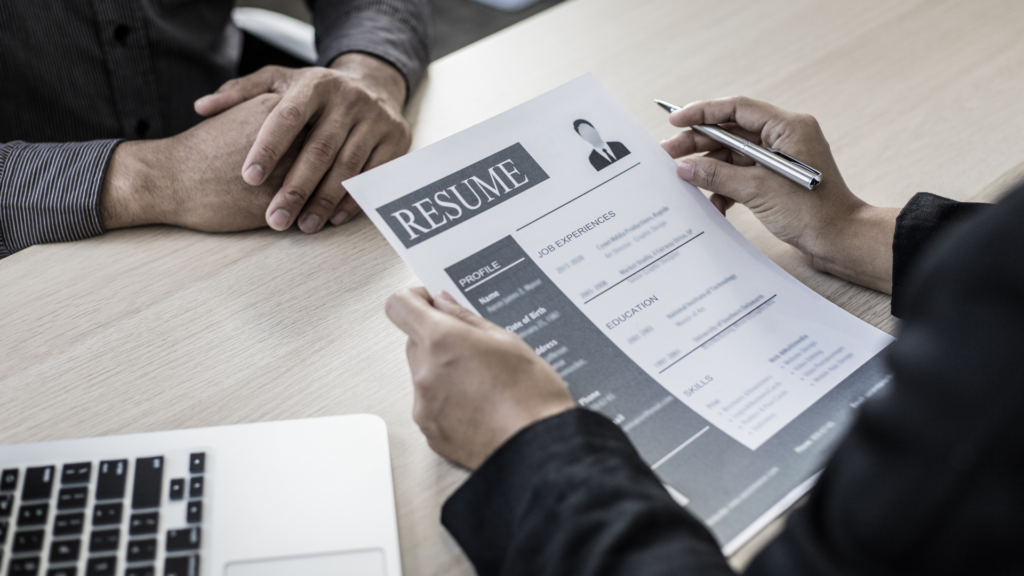
- A simple resume or work-history sheet, even if this is your first job.
- Reference names and phone numbers — a teacher, coach, volunteer supervisor, or past employer works great.
- Any documents specifically requested in the interview invitation, especially proof of age, right-to-work docs, or work-permit info.
- For minors: any required work permit, school form, parent/guardian consent, or proof-of-age document needed in your area.
- A pen and small notebook — perfect for jotting down next steps, orientation details, uniform info, or the manager’s contact.
The refined approach is this: Bring what proves you’re ready, but don’t overshare sensitive documents before the actual hiring stage. A McDonald’s interview is usually not the same as onboarding. In the U.S., employment eligibility verification happens through Form I-9 once you’re hired. USCIS accepts either one List A document or a combination of List B and List C documents.
Why Generic Advice Falls Short
Most articles say bring your resume, ID, and a good attitude. That’s directionally helpful, but it misses the point. McDonald’s interviews are operational. The manager is often trying to solve a staffing gap—covering breakfast, lunch rush, closing, weekends, or high-turnover shifts. A fancy resume matters less than a clear, realistic answer to “Can you reliably work the shifts I need?”
Hiring isn’t fully centralized. While McDonald’s has a Careers site, follow-up usually goes through the individual store. Many roles are labeled “US Restaurants – Franchise Owned,” so the local operator sets some of the details.
That local variation matters. A 16-year-old applying after school might need different documents than an adult going for overnight shifts. A corporate role interview looks different from a crew-member one.
The Four Things the Interviewer Is Really Checking
1. Identity and basic eligibility Common advice says bring ID because every job requires it. True, but full employment-verification documents usually come during hiring/onboarding, not the interview itself. In the U.S., the key is Form I-9 from USCIS, which verifies identity and work authorization after hiring. The nuance: Employers can’t demand one specific document if others are acceptable. You can use one List A document (like a U.S. passport) or one List B (identity) plus one List C (work authorization).
2. Schedule fit People say “be ready to discuss availability.” But availability is often the most valuable thing you bring. Managers hire because they have uncovered shifts. A vague answer makes it hard to place you. Bring it written out, something like: Monday–Friday: after 4:00 p.m. Saturday: 8:00 a.m.–4:00 p.m. Sunday: unavailable Cannot work past 9:30 p.m. during school weeks Can work holidays with one week’s notice
3. Reliability evidence First-time workers don’t always need a formal resume, but you do need to show reliability. A simple one-page sheet listing school activities, volunteering, babysitting, sports, clubs, chores, or good attendance helps the manager see you as dependable. The store can train you on registers and food prep, but they can’t easily train someone to show up consistently.
4. Communication under pressure Practice common questions, but focus on short, specific answers. Managers need people who stay calm when orders get mixed up, customers are impatient, or the drive-thru is backed up. Have two quick examples ready—one about teamwork and one about handling stress.
How the Hiring Process Usually Works
It typically flows like this: online application → screening or interview scheduling → store interview → hiring/onboarding if selected. Olivia on the McHire site can help with the early steps.
Crew interviews are often short. The manager is checking if your availability, attitude, transportation, and maturity fit the store. If they want to move forward, then you’ll do tax forms, payroll setup, uniform details, training schedule, and I-9 verification.
A question most articles skip: Should you bring your Social Security card? In the U.S., you may need I-9 documents once hired, but don’t assume you have to hand it over at the interview. Bring it only if the invitation specifically asks for onboarding paperwork or the manager says you’re moving to that stage. There are multiple acceptable document combinations.
What to Bring vs. What to Hold Back
| Item | Bring to interview? | Why it matters | Hidden trade-off |
|---|---|---|---|
| Photo ID | Yes | Confirms identity and readiness | Usually enough for interview, not always for full eligibility |
| Availability sheet | Yes | Helps manager match you to shifts | Too much “flexibility” can cause later issues |
| Resume/work-history sheet | Yes, even simple | Gives manager quick facts | A long resume can distract from availability |
| References | Yes | Useful for quick validation | Ask references first so they’re prepared |
| Social Security card | Sometimes | May be used for I-9/payroll after hire | Sensitive—avoid copying before hiring |
| Birth certificate/passport | Sometimes | May satisfy work authorization or age proof | Carry securely; don’t leave originals |
| Work permit/minor paperwork | Yes, if under 18 and required | Prevents scheduling delays | Rules vary—check local requirements |
| Bank details/direct deposit | Usually no | Needed later for payroll | Not normally for first interview |
| Food handler card | Only if requested | Could help for certain roles | Many crew roles train after hiring |
Downstream Impact
What you bring (and how clearly you communicate) directly affects store scheduling. Managers build rosters based on real availability. If you say you’re “open anytime” but later can’t work past 7 p.m., it creates gaps in training, drive-thru coverage, breaks, and closing.
Interview Readiness Matrix
| Applicant situation | Highest-value item to bring | Why it beats generic advice | Risk if missing |
|---|---|---|---|
| First job, still in school | Availability sheet + school activity list | Shows reliability without formal work history | Manager cannot tell when you can work |
| Adult with past jobs | Short resume + references | Speeds trust-building | Interview stays purely verbal |
| Minor under 18 | Proof of age/work permit if required | Youth rules can block scheduling | Hiring may stall until paperwork is resolved |
| Open availability applicant | Written shift preferences | Prevents unwanted hours | “Open” may mean nights, weekends, closing |
| Applicant using online McHire | Copy of confirmation/details | Helps if store can’t find your application | Manager may need to search by name/email |
| Returning McDonald’s worker | Prior store, dates, manager name | Helps verify experience quickly | Experience may not transfer between franchisees |
Practical Tips from Experience
Bring everything in a simple folder so nothing gets lost in a busy lobby or back office.
Wear clean, simple, work-appropriate clothes. You don’t need a suit for crew roles—just look ready to be around food and customers. Closed-toe shoes send a good signal.
Prepare three solid answers:
- Why do you want to work here?
- What is your availability?
- Tell me about a time you worked with a team or handled stress.
Be specific: “I can work after school from 4 p.m. to 9 p.m., and Saturdays before 5 p.m. I play soccer on Sundays, so I can’t work then until the season ends in June.”
A Quick Practitioner Note
In theory, people say bring everything to avoid delays. In practice, problems happen when applicants share sensitive documents too early or can’t clearly explain their real availability. Bring your ID and required papers in a folder, but wait to hand over sensitive onboarding items until the manager confirms next steps.
This is especially relevant now that so much happens online. Digital systems collect info before the interview, so there’s no need to overshare in person.
Limitations and Risks
The biggest variable is location. Rules differ by country, state, province, and franchise. Youth employment laws are another key area—U.S. Department of Labor rules plus state restrictions on hours and tasks for workers under 18.
And remember: An interview invitation isn’t a job offer. Treat it as a conversation until you get clear next steps.
FAQ
Do I need a resume for a McDonald’s interview? Not always, but bring a simple one-page version. If it’s your first job, list school activities, volunteering, clubs, sports, babysitting, chores—anything that shows responsibility.
Should I bring my Social Security card? In the U.S., you may need acceptable I-9 documents after being hired, but you don’t have to hand it over at the interview. Only bring it if the message requests onboarding documents or the manager moves you into that stage.
What should a 16-year-old bring? Photo ID or school ID, written availability, parent/guardian contact if needed, and any work permit or proof-of-age document required in your state or country. Youth labor rules vary.
Can I just bring my phone instead of printed documents? You can keep confirmations on your phone, but a printed or written availability sheet is better. It helps the manager compare your schedule with open shifts quickly.
What should I wear? Clean, simple, work-appropriate clothing. Neat casual plus closed-toe shoes is usually perfect for crew interviews—the goal is to look reliable and ready for a customer-facing job.
What if McDonald’s asked me to bring proof of identity? Bring exactly what they requested if you have it. If not, bring another official ID and ask what else they’ll accept for the next step.
Do I need references? They’re helpful but not always required. A teacher, coach, volunteer coordinator, or former supervisor works well if you don’t have job experience.
Should I bring bank information? Usually not for the first interview. Direct deposit details come during onboarding after you’re hired.
Wrapping It Up
For a McDonald’s interview, focus on photo ID, your written availability, a simple resume or work-history sheet, references, and anything the restaurant specifically requested. If you’re under 18, double-check local rules for work permits or proof of age.
The non-obvious truth? Your availability sheet often matters more than your resume. Managers are usually trying to solve shift-coverage problems, so the person who clearly explains when they can work is the easiest one to hire, train, and schedule. Good luck—you’ve got this!